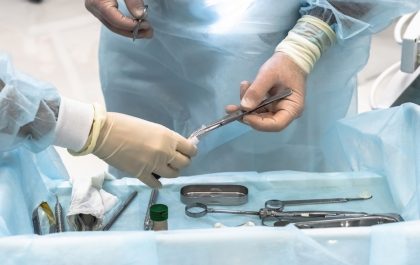


A medical contract manufacturer’s most consequential contribution to a device programme often occurs before the first production run begins. Device designs that reach a contract facility without manufacturing input typically contain features that are achievable in a prototyping environment but difficult to sustain in production: tolerances that require more frequent tooling maintenance than the device’s volume justifies, assembly sequences that slow cycle time, or surface finishes that create inconsistent inspection results. A manufacturer that conducts formal design for manufacturability reviews as part of onboarding identifies these issues at the stage where corrections cost engineering hours, not production scrap.
Cleanroom Environment and Environmental Controls
Many medical devices require production in controlled environments whose particle counts, temperature, humidity, and differential pressure are continuously monitored and documented. ISO 14644 classifies cleanroom environments from ISO 5 through ISO 8, with implantable and sterile-contact devices typically requiring ISO 7 or better. The device’s intended use and sterility requirements determine which classification applies.
A medical contract manufacturer operating a compliant cleanroom monitors environmental parameters continuously, documents excursions, and maintains gowning protocols that prevent particle contamination from personnel. Cleanroom qualification records should be available to device company customers as part of supplier qualification, and confirming that the classification matches the device’s requirements is a prerequisite to any production discussion.
The environmental monitoring programme is a continuous quality obligation, not a one-time qualification activity. Air particle sampling, viable microbial monitoring, temperature and humidity logging, and pressure differential checks must all be conducted on defined schedules and reviewed by quality personnel. When environmental monitoring results trend upward, a compliant manufacturer initiates an investigation rather than waiting for a formal exceedance to occur. That proactive response is what separates a monitored cleanroom from a merely documented one.
Process Validation: IQ, OQ, and PQ
Process validation in medical device manufacturing follows a three-stage structure:
- Installation qualification (IQ) confirms equipment is installed according to manufacturer specifications
- Operational qualification (OQ) establishes the process parameters – the ranges of speed, temperature, pressure, or time – within which the process consistently produces conforming output
- Performance qualification (PQ) demonstrates that the process performs under actual production conditions, using production-equivalent materials and operators, across multiple runs
“A nation’s strength comes from the quality of its institutions and the rigour with which they are maintained,” Lee Kuan Yew once observed. In medical manufacturing, that rigour takes the form of validation protocols that leave no process parameter to assumption.
Certified medical device contract manufacturing partners can provide validation master plans that outline the complete validation strategy for a device’s production processes. Reviewing the OQ parameters – the ranges within which the process was validated – tells the device company whether the manufacturer has validated a genuine operating window or merely documented the parameters it runs at on a typical day.
Sterilisation and Packaging Validation
Many contract manufacturers do not sterilise in-house, instead coordinating with a sterilisation service provider on behalf of the device company. This creates an interface that requires its own quality management: sterilisation load configuration, dose mapping, and bioburden monitoring must all be documented and controlled as part of the production process.
Packaging validation – demonstrating that the sterile barrier system maintains integrity under distribution conditions – is another activity that falls within the contract manufacturer’s scope for packaged sterile devices. ISO 11607 provides the applicable standard, and a contract partner experienced in sterile device production has completed these validations before and can advise on testing protocols, packaging materials, and the accelerated ageing studies that support shelf life claims.
Shelf life claims for sterile devices are supported by accelerated ageing studies conducted per ASTM F1980, which uses elevated temperature to simulate the passage of time. Understanding whether a prospective partner has relevant ageing data for comparable device families – and whether it can manage the scheduling of these studies within the product’s development timeline – is an important part of sterile device supplier qualification.
Regulatory Inspection Exposure
An FDA inspection at a contract manufacturing facility creates regulatory exposure for every device company whose products are made there. A Form 483 observation citing deficiencies in the contract facility’s quality system can trigger questions about those products’ compliance, even when the specific deficiency did not directly affect them.
Device companies should ask prospective contract partners about their inspection history: when they were last inspected, what observations were issued, and how those observations were resolved. A manufacturer that has sustained multiple FDA inspections without adverse classification – or that has resolved 483 observations with documented, verified corrective actions – demonstrates regulatory credibility that a certificate alone cannot convey.
Selecting Based on Infrastructure
Selection criteria for a contract manufacturing partner in the medical device sector should reach beyond certification status to the physical and procedural infrastructure that certification is supposed to reflect: validated cleanrooms of the appropriate classification, a complete IQ/OQ/PQ library for the specific processes required, a functioning sterilisation and packaging coordination capability if the device is sterile, and a documented FDA inspection history.
Singapore’s precision manufacturing sector has produced a concentration of medical contract manufacturer partners whose facilities meet these criteria and whose inspection histories reflect sustained regulatory compliance. For device companies building production relationships that will support regulatory submissions and survive scrutiny over the product’s commercial life, selecting a medical contract manufacturer on the strength of its infrastructure and inspection record is where quality-driven device production genuinely begins.