
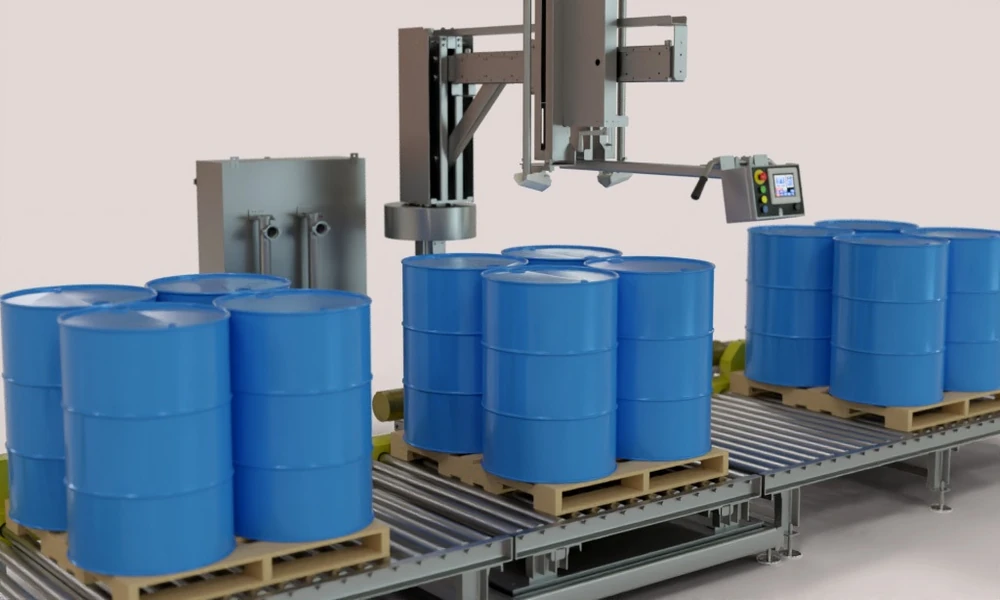

The best day to judge a supplier is the day you stand in its workshop watching your machine run before it ships. Shortlisting drum filling machine manufacturers from websites tells you little, since every site promises accuracy and support. A factory acceptance test, where the buyer ticks through an agreed list with the finished station in front of them, tells you a great deal. Imagine that visit, clipboard in hand, and the questions it raises about the firm that built the machine.
Tick One: Is This the Machine We Ordered
Begin with the paperwork on the bench. A competent maker hands over a general arrangement drawing, an electrical schematic and a parts list that match the machine on the floor. Check the model, the lance length, the scale capacity and the materials of every wetted part against the order. If drawings are missing or describe a different revision, expect the same looseness when you ask for a spare seal three years from now.
Tick Two: Build Quality You Can See
Walk round it slowly. Welds on stainless parts should be smooth and continuous, with no crevices that trap product. Cables should be routed in trunking and labelled at both ends. Pneumatic lines should be tidy and tagged. Open the control cabinet: components from recognised brands, numbered terminals and a wiring diagram in the door pocket suggest a maker who expects the machine to be maintained. A tangle suggests it was built once and never revisited.
Tick Three: The Scale Tells the Truth
A drum filler is a weighing instrument first. Ask the maker to place certified test weights on the platform and show the reading at several points across the range. Ask which standard the load cells and indicator are approved to, and whether the scale can be verified for trade use if you sell by weight. A manufacturer who cannot produce test weights or calibration records on the day has not been checking its own work.
Tick Four: Watch It Fill Your Product
Now the important part. Have several drums filled with your product or an agreed substitute of similar thickness. On a semi-automatic drum filling unit the operator positions the lance over the bung and starts the cycle; the machine lowers the lance, fills fast, slows to a dribble and stops on weight. Reweigh each drum on a separate scale. Note the spread between drums. Consistency across ten fills matters more than one perfect result.
Tick Five: Foam, Drips and Splashes
Look inside the first drum as it fills. A lance that stays below the liquid surface should produce a calm rise with little froth. When the lance lifts, watch the tip. A drip tray should move underneath before the arm swings away, and the drum top should stay dry. Ask to see the cycle with the fill rate turned up. Makers confident in their design are happy to push it; others find reasons to move on.
Tick Six: What Happens When Things Go Wrong
Press the emergency stop mid-fill. The valve should close at once and the lance stay put. Remove the earthing clamp, if the machine is built for flammables, and confirm the cycle refuses to start. Start a fill with no drum present. Interrupt the air supply. Each fault should produce a clear message on the screen and a safe state. For hazardous-area machines, ask to see the certificates for the explosion-protected components fitted.
Tick Seven: Can Your Operator Run It
Hand the controls to someone who has never seen the machine. Can they select a product, set a target weight and start a fill after five minutes of instruction? Is the screen available in a language your staff read? Are settings stored as named recipes and protected by password? Good manufacturers design for the person on the night shift, and it shows in how little explanation the panel needs.
Tick Eight: Changeover and Cleaning
Ask the maker’s technician to switch from a 200-litre drum to a smaller container or an IBC, if you ordered that option, and time it. Then ask for the lance and valve to be stripped as if for cleaning. Count the tools and loose parts. Seals should be standard sizes obtainable anywhere. A design that needs a special spanner held only by the factory will be a nuisance for as long as you own it.
Tick Nine: Life After Shipment
Before leaving, sit with the service manager. Where are engineers based and how quickly can one reach you? Which spares are recommended and which are stocked near you? Who installs and commissions the machine, and is a site acceptance test included? Ask for the names of two customers who have owned a similar station for several years. Then ring them, and ask what happened the first time something broke.
Scoring the Visit
Most of what distinguishes one builder from another appeared somewhere on that clipboard: documentation, workmanship, honest weighing, behaviour under fault, ease of use and after-sales commitment. Write the same test list into your enquiry and ask each bidder to confirm it will host the visit. Among drum filling machine manufacturers, those who welcome a witnessed test on your product, and pass it without excuses, are the ones worth paying. The rest have told you what you needed to know.
Drum Filling Machine Manufacturers: What to Look For