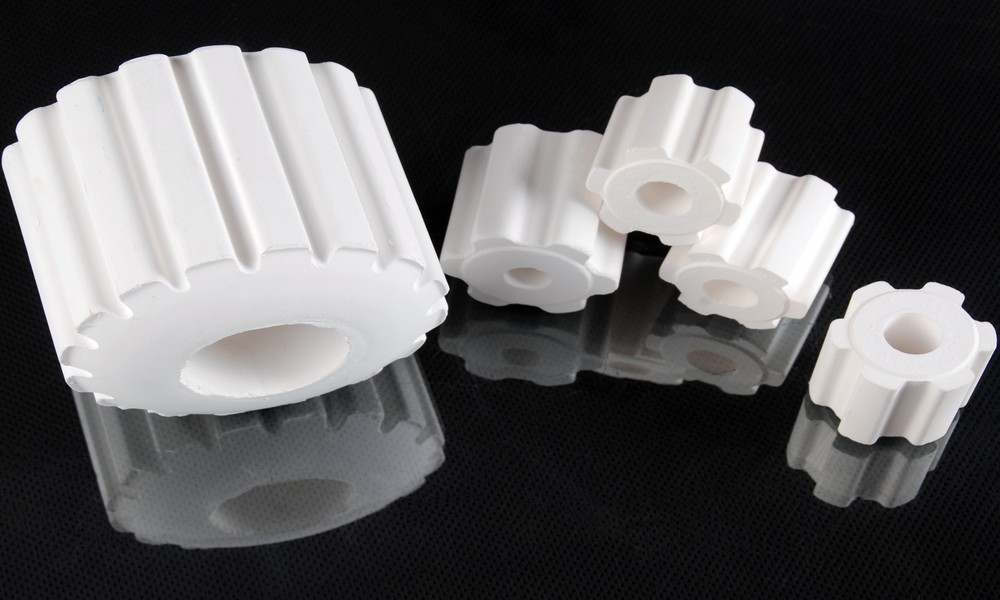

Ceramic injection molding has revolutionised how manufacturers approach the production of intricate ceramic parts, offering a pathway to creating components that combine exceptional material properties with complex geometries. If you’ve been exploring manufacturing options for ceramic components, you’ve likely encountered this technology and wondered whether it’s the right fit for your needs. This guide walks you through the essentials, helping you understand what makes this process so valuable for producing high-precision ceramic parts.
What Makes Ceramic Injection Molding Special
At its core, ceramic injection molding takes the best aspects of plastic injection moulding and applies them to ceramic materials. The process creates parts that would be extraordinarily difficult to produce through traditional ceramic forming methods. Think of it as a way to mass-produce ceramic components with the same efficiency you’d expect from plastic manufacturing, whilst maintaining the superior properties that make ceramics so desirable in demanding applications.
The magic happens when fine ceramic powders are mixed with organic binders to create a feedstock that flows like plastic when heated. This mixture gets injected into precisely machined moulds under high pressure, filling every detail of the cavity. After cooling, the binder is removed and the part is sintered at high temperatures, transforming it into a dense, fully ceramic component.
The Step-by-Step Process
Understanding how CIM works helps you appreciate why it delivers such impressive results. The process unfolds in several distinct stages:
- Feedstock preparation: Ceramic powders are carefully blended with polymer binders to achieve the right consistency and flow characteristics
- Injection: The heated feedstock is injected into moulds under controlled pressure and temperature conditions
- Debinding: The organic binder is systematically removed through thermal or solvent-based processes
- Sintering: Parts are fired at temperatures often exceeding 1,400 degrees Celsius, where ceramic particles fuse together
- Finishing: Depending on requirements, parts may undergo grinding, polishing, or other secondary operations
Each stage demands careful attention. Singapore’s ceramic injection molding facilities have refined these processes to achieve remarkable consistency, demonstrating that attention to detail at every step produces superior outcomes.
Materials You Can Work With
The beauty of ceramic injection molding lies partly in its versatility regarding materials. Different ceramic compositions offer distinct advantages, allowing you to select the material that best matches your application’s demands.
Alumina stands as one of the most commonly processed materials, valued for its excellent electrical insulation, wear resistance, and cost-effectiveness. Zirconia brings exceptional toughness and strength to the table, making it popular for medical implants and cutting tools. Silicon nitride offers outstanding thermal shock resistance, whilst silicon carbide provides extreme hardness for abrasive environments.
The choice matters significantly. You wouldn’t select alumina for an application requiring maximum toughness any more than you’d choose zirconia when electrical insulation is the primary concern. Understanding your application’s specific requirements guides material selection and ultimately determines your component’s performance.
Achieving High Precision
Precision represents one of the compelling reasons manufacturers turn to Ceramic injection molding. The process can achieve tolerances that rival or exceed traditional machining methods, often without requiring secondary operations. Parts emerge from sintering with dimensions controlled to within a few hundredths of a millimetre.
This precision doesn’t happen by accident. It requires careful management of shrinkage during sintering, typically 15 to 20 per cent linear shrinkage depending on the material and processing conditions. Experienced manufacturers compensate for this through precise tool design, accounting for how the material will behave during each processing stage.
Singapore’s ceramic injection molding sector has developed sophisticated capabilities in this area, utilising advanced simulation software and process control systems to predict and manage dimensional changes throughout production.
Design Considerations for Success
Getting the most from ceramic injection moulding requires thinking about design from the start. The process offers tremendous design freedom, but certain principles help ensure optimal results.
Wall thickness consistency matters enormously. Variations in thickness can lead to uneven shrinkage and potential defects during sintering. Aim for uniform walls where possible, and where thickness changes are necessary, implement gradual transitions rather than abrupt steps.
Draft angles facilitate part ejection from moulds. Even a degree or two of taper on vertical walls makes a significant difference in production efficiency and part quality. Sharp corners concentrate stress and can become crack initiation points, so incorporating generous radii wherever feasible improves component reliability.
Cost Factors to Consider
Understanding the economics of CIM technology helps you make informed decisions about when it makes sense for your project. Tooling represents the most significant upfront cost, with precision moulds requiring substantial investment. This makes the technology most economical for production runs numbering in the thousands or tens of thousands of parts.
However, the per-unit cost drops dramatically as volume increases. Once you’ve amortised tooling costs across sufficient quantities, ceramic injection molding often proves more economical than machining or other forming methods. The equation shifts favourably as geometric complexity increases, since intricate features that would require extensive machining time add minimal cost to the moulding process.
Quality and Consistency
The automated nature of ceramic injection moulding delivers remarkable consistency across production runs. Once process parameters are established and validated, each part replicates the same characteristics. This repeatability proves invaluable in industries where component variation can affect system performance or reliability.
Quality control happens at multiple stages, from feedstock characterisation through final inspection. Non-destructive testing methods verify that parts meet specifications without compromising their integrity.
Moving Forward with Your Project
Whether you’re developing medical devices, electronic components, automotive parts, or industrial equipment, understanding what Ceramic injection molding offers helps you make better manufacturing decisions for achieving the precision and performance your applications demand.