

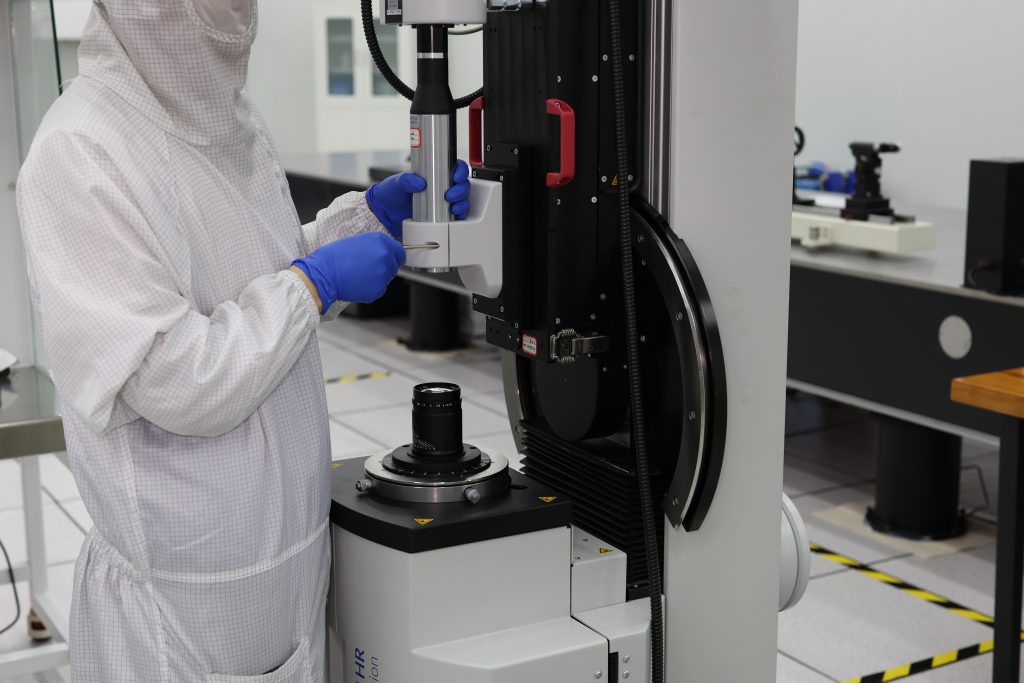
High-quality imaging relies on accurate, reliable optical performance. Precision MTF Testing allows engineers, designers, and system users to measure how effectively a lens or optical system reproduces contrast at varying spatial frequencies. This data is essential for determining sharpness, resolution, and overall image fidelity. Reputable providers such as Image Science supply advanced test tools and expertise to help users evaluate and optimise imaging components with confidence. Whether developing new optics or validating performance in the field, MTF analysis plays a critical role in achieving consistent, high-resolution results.
What MTF Measures and Why It Matters
MTF stands for Modulation Transfer Function—an objective metric that describes how well an optical system transfers detail from the object to the image. Instead of relying on subjective impressions of sharpness, MTF Testing delivers quantifiable, repeatable measurements.
Contrast Reproduction
By analysing contrast at different spatial frequencies, MTF reveals how fine details degrade across the optical path. High MTF values indicate crisp detail reproduction.
Resolution Performance
MTF helps determine the maximum resolving power of lenses, essential for applications requiring extremely small or distant feature detection.
Lens Consistency
Testing can uncover manufacturing variations, alignment errors, or optical aberrations that affect image quality.
These insights help users compare lenses, optimise configurations, and make informed choices based on precise performance data.
How MTF Testing Is Performed
Professional MTF analysis uses specialist equipment combined with dedicated software to capture and interpret performance measurements accurately.
Test Targets and Light Sources
Carefully designed optical charts and illumination systems generate consistent conditions for measurement.
Optical Benches and Positioning Systems
High-precision mounts ensure lenses are held securely and aligned correctly to avoid test anomalies.
Software Interpretation
Advanced algorithms process captured data to generate MTF curves, resolution charts, and contrast profiles.
Through this structured approach, MTF Testing provides reliable, traceable results suitable for research, development, and quality control.
Applications Across High-Performance Imaging Fields
MTF measurements are essential in industries where visual precision directly impacts outcomes:
Photography and Cinematography
Lens designers and professionals use MTF to compare optics, ensure consistency, and refine imaging performance.
Defence and Security
Surveillance systems, targeting optics, and reconnaissance tools depend on accurate resolution analysis for mission-critical reliability.
Microscopy
Scientific research relies on crisp, high-resolution imaging to study microstructures and biological samples.
Machine Vision and Automation
Industrial systems require precise optics to support inspection, robotics, and automated detection tasks.
In all these sectors, the ability to quantify optical performance boosts accuracy, reliability, and operational efficiency.
Guiding Design Improvements and System Optimisation
One of the biggest advantages of MTF Testing is its ability to guide improvements during lens development or system integration. Designers can identify weaknesses, adjust geometries, or refine assembly processes early in production. Users can diagnose alignment issues or compare optical components to ensure optimal system performance.
This data-driven approach reduces trial-and-error and ensures imaging systems meet required standards before deployment.
Conclusion
Precision MTF Testing is a vital tool for evaluating image quality, lens resolution, and overall optical performance. By providing objective measurements rather than subjective impressions, MTF analysis supports better design decisions, quality control, and system optimisation across photography, defence, microscopy, and machine vision. With advanced tools and expertise from providers like Image Science, engineers and users can ensure their optical systems deliver the clarity, reliability, and accuracy demanded in high-performance imaging environments.