

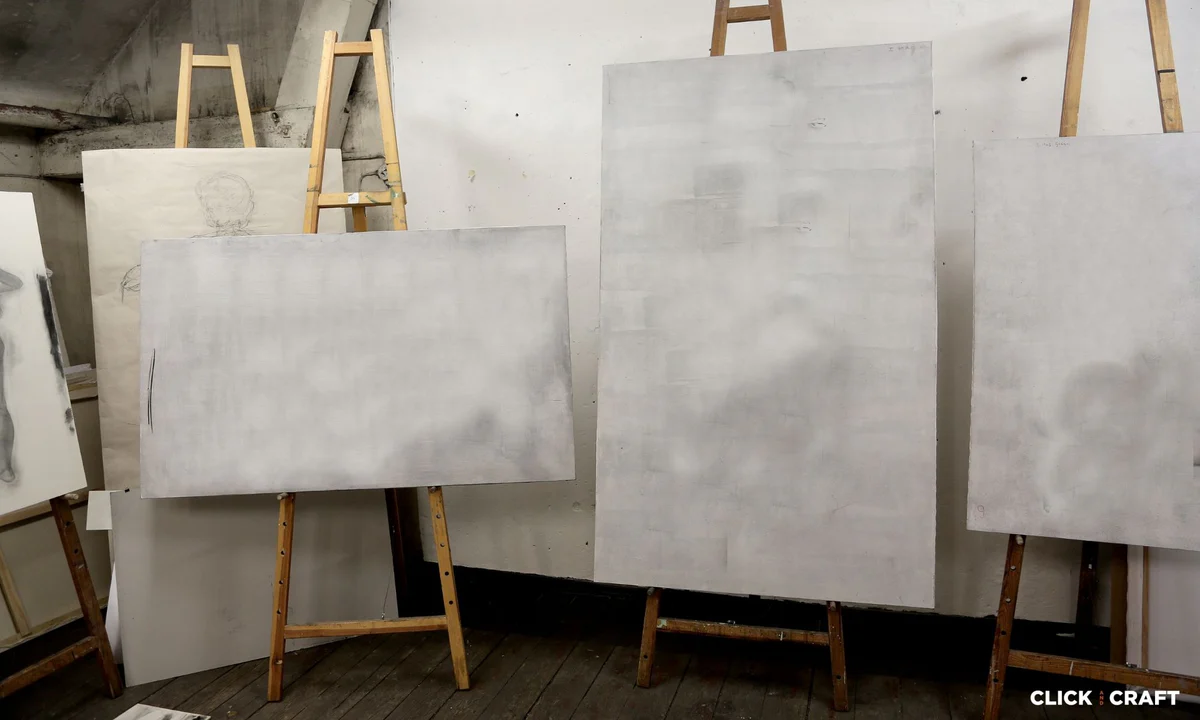
A taut canvas should remain taut, smooth, and gallery-ready − yet months or even years later you start to notice it sagging. That awkward, painful issue for artists, and collectors alike. Regardless of whether you are hanging a beloved piece of art or prepping your own for display, having a better understanding of why this occurs can spare you some angst, as well as dollars. Humid day, type of wood, and technique are just some of them. By properly stretching your canvas and being considerate with aftercare, you can eliminate most of that sagging before it even begins.
Humidity: The Silent Enemy
Canvas, as a natural fibre, responds to moisture. Its fibres draw in and swell when it gets water, which is common in humid or coastal areas. They shrink back when the wind dries things out. This movement back and forth erodes the tension with time.
Indications that humidity is getting to your canvas:
- Slight ripples along the edges
- A loose centre panel
- Waviness that appears seasonally
To avoid this, do not place artworks in a kitchen, bathroom, or a damp room. Keeping the humidity indoors constant ensures tension.
Poor-Quality Wood Leads to Warping
A stretched canvas consists of a wooden frame (or stretcher bars) and a piece of canvas attached to it in a taut manner. Cheap, soft, or poorly dried timber can warp. The tension should be even, but even a slight twist off of perpendicular causes the canvas to unlevel itself.
Common wood issues include:
- Knots weakening the structure
- Moisture trapped in the timber
- Thin/lightweight bars bending during force
The difference is in the type of wood, high quality, and kiln-dried; A good framer who does canvas framing will be using stretcher bars that are professional grade in order to sidestep all of these issues.
Incorrect Stapling or Tensioning Technique
One must stretch a canvas evenly. The fabric will eventually loosen if the tension is not even. The smallest of mistakes can become apparent as time passes.
Common technique mistakes:
- A tugging force which can be too strong in one direction
- Not tightening the corners properly
- Using weak staples
- Not securing the centre points first
Good canvas stretching follows a specific pattern: centre-first stapling, alternating sides, tension adjustments.
Temperature Fluctuations
Temperature changes trigger the fibres of the canvas to expand and contract in exactly the same way as humidity. Excessive drying makes the fabric over dry, and in equally dry rooms the fabric soaks, making the fabric slack.
Try to avoid:
- Hanging canvases near heaters
- Placing artwork in direct sunlight
- WHS and your own garage or shed WHS and your own garage or shed
Continual holding at stable temperatures maintains consistent fibres.
Low-Quality Canvas Material
Inexpensive canvas tends to thin, loosely woven, or inconsistent. Even with solid framing, it is prone to sagging as it doesn’t hold tension as great.
High-quality canvas:
- Has a tight weave
- Feels firm when stretched
- Holds tension longer
- Responds better to resizing tools
If you buy better canvas it’s expensive, but it pays back in the long term.
Lack of Corner Keys or Wedges
For instance, most professional stretcher frames have tiny wooden wedges inserted into the corners. They give framers the ability to tighten the canvas whenever necessary. With out, you can reason corrections because the fabric relaxes.
If there are no wedges in your canvas then perhaps get it re-stretched or buy a new one.
How to Fix a Sagging Canvas
Based on the reason, you may want to try:
- Very light mist on back (only for mild sagging)
- Increase tension by using corner wedges
- Re-stretching on more durable bars
- Seeking professional canvas framing support
Only a professional framer would know if a tightening is required or a full re-stretching is necessary.
Final Thoughts
And sagging primarily boils down to moisture, wood quality, tension method, or environmental conditions. If stretched properly, using high-quality materials, and correctly positioned, your artwork will remain tight, flat, and ready to hang in a gallery for years. They say − prevention is better than cure − but in case of sagging, hiring the right framing specialist brings back the beauty of the canvas.